

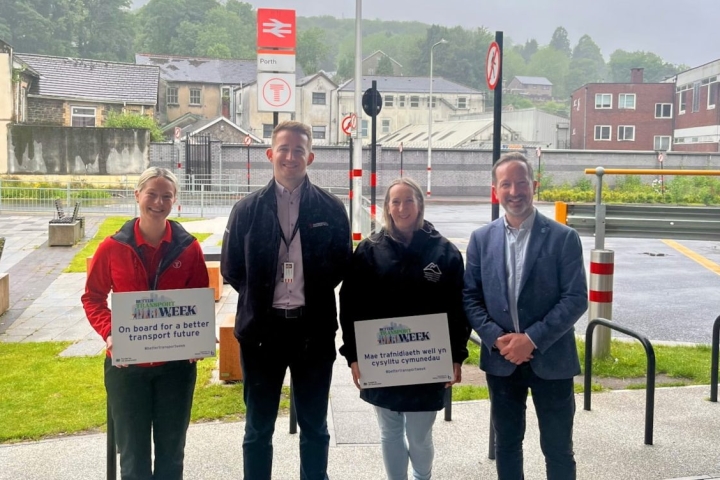
Transport for Wales has teamed up with Campaign for Better Transport to celebrate one of the biggest upgrades in rail infrastructure within the UK.
The Treherbert railway line has recently undergone a major transformation as part of the South Wales Metro project, evolving from a historic valley line into a modern, electrified railway served by brand-new trains.
Until early 2023, signalling on the line was controlled using a Victorian-era ‘Token Exchange System’. This required drivers to leave their cab to collect a physical token before entering single-track sections, returning it at the other end. While effective, the system was no longer suited to the demands of a modern, high-frequency railway.
As Transport for Wales delivered its once-in-a-generation investment to transform the valleys network, replacing this legacy system became essential. The line was closed for nine months to enable extensive engineering works, including the installation of a modern digital signalling system. This is now controlled from TfW’s new £100 million depot and Control Centre at Taff’s Well, located further down the valley.
The introduction of modern infrastructure has been supported by contactless pay-as-you-go ticketing, which has seen over 4.5 million journeys across the South East Wales metro network alone as passengers switch to tapping in and out for best-value fares.
The upgrade of the Treherbert line sits alongside a wider series of improvements for the region, following the landmark 100% electrification of the Core Valley Lines. The installation of overhead power cables brought electrification to the line for the very first time and allowed TfW to introduce electrified rail services with their brand-new Class 756 trains.
Built by leading manufacturer Stadler and first introduced onto the line in February 2025, the new Class 756 Fast Light Intercity and Regional Trains (FLIRTs) are powered by the recently installed overhead electrified wires, which carry 25,000V.
These transformative ‘tri-mode’ trains were the first passenger trains in the UK that can use diesel or battery on sections of railway track where there are no overhead wires.
Track layout, passing loops and renewed sections of rail infrastructure were also part of the modernisation, as well as longer platforms, new Access for All footbridges and improved passenger information screens.
TfW is now entering the final stages of preparation ahead of the introduction of its first brand-new, fully electric, tram-trains on Pontypridd to Cardiff Bay services this summer, supporting a true turn‑up‑and‑go Metro service for communities across the Valleys.
Marie Daly, Chief Operating Officer at Transport for Wales said: “The Treherbert line is one of our biggest transformations as part of the South Wales Metro and we’re pleased to welcome representatives from Campaign for Better Transport to Wales and offer them the opportunity to visit the line and experience the wider South Wales Metro.
“We’ve been on a journey of transformation with rail in Wales and have replaced some of the oldest railway infrastructure with some of the most modern in Europe. Through this investment, we’ve also been able to remove older trains from the network and introduce brand-new, modern fleets, alongside electrification and upgraded infrastructure.
“Just a few years ago, ‘pacer’ trains were running on these lines; today customers are benefiting from faster, more reliable and accessible services that are designed around their needs. This transformation is already making a real difference—improving journey times, increasing capacity, and providing a more comfortable and sustainable experience for the communities we serve.
“None of this would have been possible without the dedication, resilience and professionalism of our amazing teams and partners, who have worked tirelessly to deliver such a complex programme of change while keeping services running for our customers.
“Most importantly, these improvements are helping to connect people to education, jobs and each other, creating stronger, more inclusive communities across South Wales.”
The visit comes during Better Transport Week (15-21 June), Campaign for Better Transport’s annual celebration of how safe, accessible, affordable, reliable, integrated and green transport can connect communities and bring people together. Last year, more than 100 organisations supported the week, from the Department for Transport and local authorities to transport industry, NGOs, businesses and passenger groups, promoting the benefits of public transport, shared mobility, walking, wheeling and cycling.
Michael Solomon Williams, from Campaign for Better Transport, said: “I’m delighted be here in South Wales to celebrate this amazing transformation. Good public transport networks help connect us to the people we love, the things we need and the places that matter, creating thriving places and stronger communities, and building a fairer future for everyone.”